Showing posts with label Friends. Show all posts

Wednesday, 19 June 2013

Facebook Now Lets US Users Pay $7 To Promote Posts To The News Feeds Of More Friends


Facebook Promoted Posts
Facebook is expanding to the U.S. the controversial Promoted Posts feature that lets users pay to get their posts more visibility in the news feed. It will cost $7 per post and Facebook hopes it will be used for garage sales, parties, wedding photos and other important announcements.
Promoted Posts has already been rolled out to 20 other countries and is available to people with fewer than 5,000 total friends and subscribers. Promoted Posts could help surface important announcements and earn Facebook money. However, I worry that Promoted Posts could change the atmosphere of Facebookfrom one where the most beloved content gets seen most to one where the rich can dominate the news feed.
Facebook first began testing the product, then called Highlight, in May in New Zealand. It’s still testing price points for the U.S. so it could go up or down from $7, and cost varies across international markets to sync with what’s appropriate for local economies.

HOW PROMOTED POSTS GET THE WORD OUT

After you publish a post, a Promote button will let you pay to bump up its rank in the news feed — making it appear both higher in the feed, and to a larger portion of your friends. Unpromoted posts are typically only seen by 12-16 percent of your friends.
After you Promote a post, it will be marked “Sponsored,” and you can check to see how many more people saw it because you paid. For example, you’d see “So far your post has had 3.8x as many views because you promoted it.”

IS PAY-TO-PLAY OKAY?

Facebook is becoming a critical one-to-many communication medium for people. Often we’re just sharing fun things that we don’t desperately need eyeballs on, but other times a better news feed position could really help. If I’m trying to sell all my possessions before moving to Thailand, Promoted Posts could be a cost-effective way of making sure more friends know about my garage sale. Raising money for charity or looking for bone marrow donors are some other clearly positive applications.
But as with anything on a sandbox service like Facebook, the success and impact of Promoted Posts will depend on how people use it. A friend with a trust fund could promote every post he publishes just because he has the money. In that way, the feature could distort the news feed’s meritocracy, where posts that get lots of likes and comments are shown to more people.
It could turn into a big money maker, though. Since the $7 is essentially all profit, Facebook could nearly double its revenue per user if it could get each US user to promote just one post a year.
If Facebook isn’t careful, Promoted Posts could offend and marginalize financially-strapped users. If it makes sure to minimize overuse, though, it could give people a powerful way to identify what their most important content is: putting their money where their mouth is.

Tuesday, 18 June 2013

Rounds Brings Co-browsing To Mobile To Let Friends Surf The Web Together During Live Video Chats


Ronds, the video chat app and Israeli startup backed by $5.5 million in funding from Verizon Investments, Rhodium and DFJ’s Tim Draper among others, has been slowly expanding across platforms. Originally built as a Facebook-centric experience, Rounds expanded to the desktop last summer, launched Mac and Windows apps to allow its users to send and receive video calls without using their browser or signing into Facebook. A few months later, Rounds went mobile, officially debuting its first native apps for iOS and Android.

For those unfamiliar, the app essentially gives users the ability to not only participate in realtime video chat with their friends — from any media — but do so while watching YouTube videos together or simultaneously play interactive games, doodle on whiteboards, browse the Web together or send virtual gifts to each other and more.
However, up until now, most of those features have existed solely for Rounds users on Facebook, desktop and the Web, but an update to its iOS and Android apps today now allows friends to surf the Web together during live video calls. Rounds claims it’s the first hangout network to enable mobile co-browsing during video conversation.
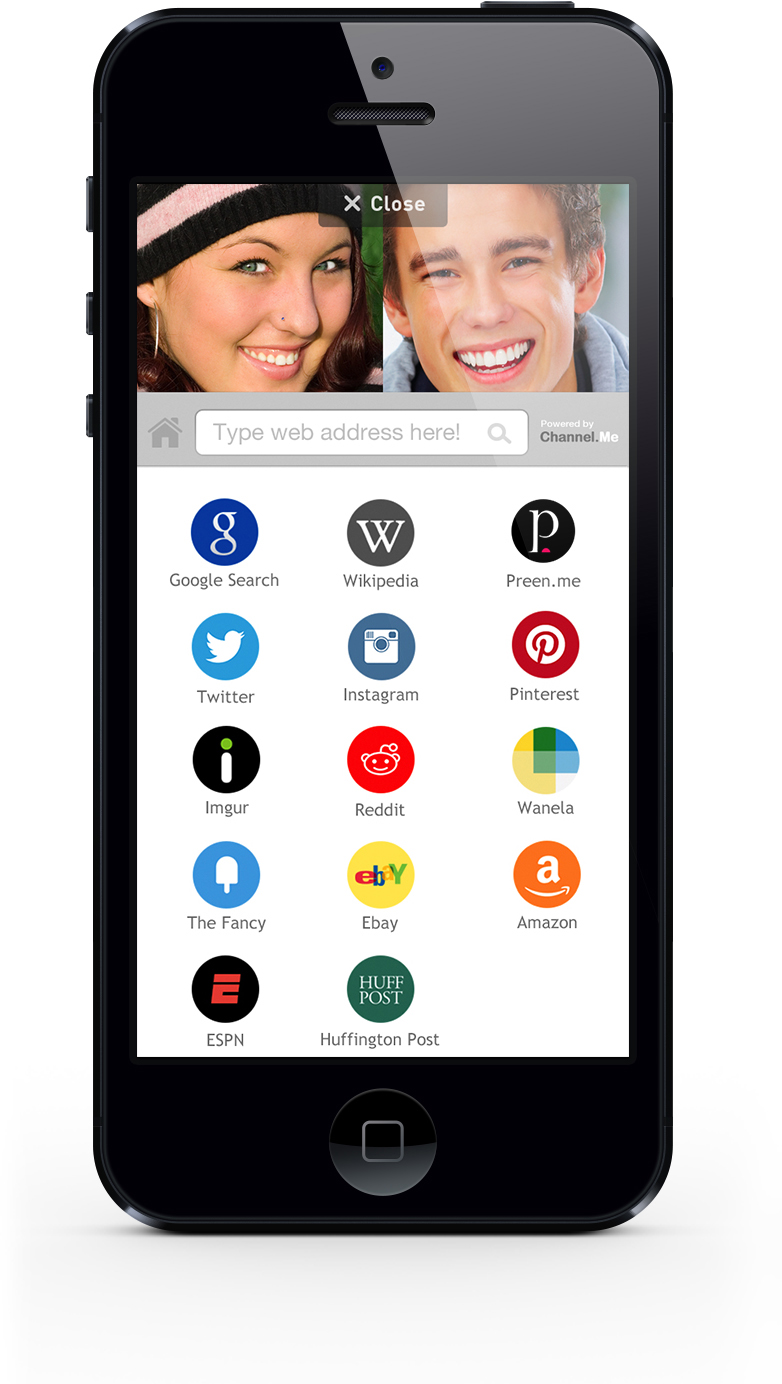
A product of a partnership with Dutch startup Channel.me, the startup’s new co-browsing functionality synchronizes your mobile device’s touch screen with that of your video chat partner, allowing both parties to surf the web and navigate the same webpage at the same time.
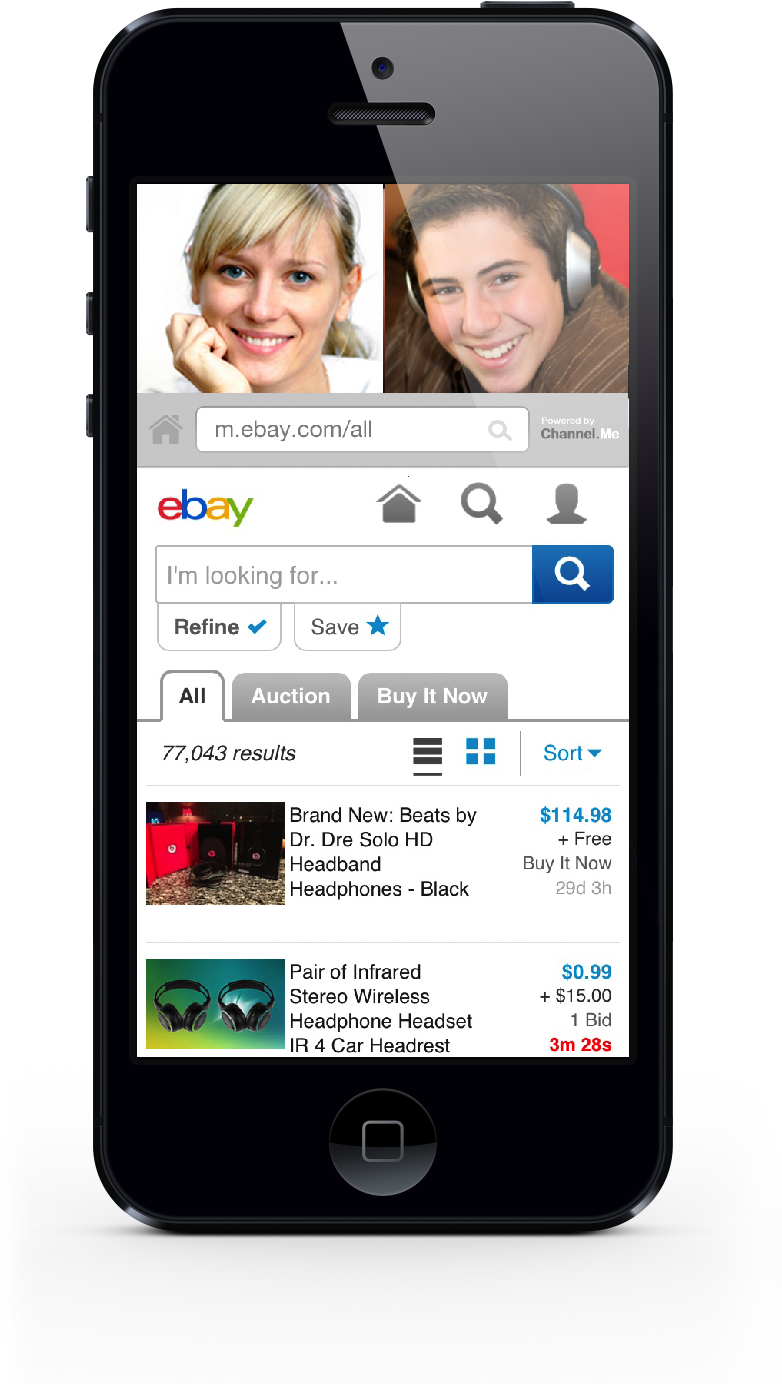
co-browsing0Both users can click on links and type in new URLs, the company says, while each person sees the other’s live video stream in thumbnail form. This allows them to see each other’s reactions FaceTime-style, while giving you illusion that you’re actually there, together, and not staying at a Motel 8 on a business trip.
While users aren’t subject to any limitations when they co-browse during live video calls, and users can type in any URL, it would be impossible for Rounds to beta test every site on the Web. Instead, at launch, the startup is offering a handful of sites that it “stands behind technically” and fully support its synchronized experience, including Google, Wikipedia, Preen.Me, Twitter, Instagram, Pinterest, Reddit, Amazon, eBay, ESPN, The Huffington Post, wanelo, Imgur and TheFancy. Going forward, Rounds will continue to add support for the most-requested sites, based on user feedback.
The company also tells us that, in terms of security, the co-browsing experience displays usernames and email addresses but not passwords, and users must share a pre-existing Facebook friendship before they can participate in video chats together. Once they do, they can chat, browse, play games and watch videos together and add filters and doodles on top of their videos.
While some of these features may sounds particularly appealing to older readers, since the beginning, Rounds’ target audience has primarily been teens, who eat these kind of features up. As mobile devices proliferate, retailers and eCommerce players have been looking for more ways to capitalize on the fact that our mobile devices are always with us. Not only that, but considering the offline shopping experience is inherently social, they want to emulate that social experience on the Web and on mobile.
co-browsing2Rounds’co-browsing and synchronized navigation inherently offer a more social experience when visiting sites like eBay or Amazon, allowing young users to video chat while surfing, browsing for new clothes, gadgets or products — or even while doing their homework. Don’t be surprised if Rounds’ new functionality catches the attention of the big retail players or if social platforms like G+ (and Hangouts) expand to include more of these co-browsing and synchronous user experiences.
Today, Rounds has over eight million registered users, 500K of which are on mobile, with a fairly even breakdown between male and female users (52 percent female, 48 percent male) and teens representing the largest demographic. The company also says that 43 percent of its video calls are “meaningful,” meaning that they’re longer than the industry standard, and, on mobile, users are currently making 13-minute calls on average, for example.
Since its inception, Rounds has seen over 100 million hangout sessions across its networks, which include its destination site, (formerly) Wave, Chrome, Facebook and now mobile).